
Author: Sarah

  • Curiosity Is Enough

    Curiosity Is Enough

    by Sarah Collier, Executive Director, National Road Heritage Corridor

    When I was a junior in high school, I dropped out of AP U.S. History.

    This is still a surprising sentence for me to write. I was a good student, a member of the National Honor Society, and student council president. Humanities were supposed to be my strength, and many of my friends were taking the class. There was no obvious reason for me to leave it.

    But I did.

    It wasn’t that I disliked history. In fact, I was fortunate enough to have parents who spent large portions of my childhood taking me to significant places throughout our region. They let me explore how musket balls were made at the Shot Tower, what plantation life looked like at the Hampton Mansion, and why John Brown’s raid on Harpers Ferry mattered. History, as I experienced it then, was tactile and human and full of questions.

    I loved going to historic sites. I loved eating in old hotels. I loved poking around old buildings and viewing artifacts from the past. My mother’s best friend lived in Gettysburg and showed me a place where she said freedom seekers once hid from slave catchers, a small nook above a massive walk in fireplace. I found all of this fascinating.

    What I struggled with was history presented as memorization without meaning. In this class, a significant portion of our grade rested on marble composition notebooks filled week after week with names, definitions, and dates copied faithfully from a massive textbook. I couldn’t connect to that approach. I made it through two weeks of haphazardly trying to complete my notebook and then I dropped the class.

    Twenty five years later, I serve as Executive Director of the National Road Heritage Corridor, an organization grounded in the fundamentals of American history. That irony isn’t lost on me.

    What I’ve come to understand is that I didn’t reject history. I rejected a version of it that left no room for curiosity, context, or connection. What I found instead, and what we have shaped NRHC around, is a different way of engaging with the past. One that asks not just what happened, but why it mattered, how it shaped the places we inhabit, and what it still asks of us today.

    I share this because it gets to the heart of who we are as a Heritage Area.

    If you are academically inclined, if you love archives, footnotes, and deep historical analysis, NRHC is here for you. We value rigorous scholarship and work closely with historians, preservationists, and researchers who help ensure the stories we tell are accurate and responsibly told.

    But we are also here for the people who don’t think of themselves as history people.

    We are here for those who are simply curious about the world around them. Curious about why a town looks the way it does. Curious about how people moved across this landscape. Curious about who came before them, and what traces of those lives still remain.

    As we enter America’s 250th anniversary, I hope we can celebrate curiosity as a starting point, not expertise as a prerequisite. Our heritage does not belong only to those with degrees or credentials. It belongs to everyone who lives in, moves through, and cares about this place. Exploration is for everyone.

    If you find meaning in understanding where we’ve been and how we arrived here, we hope the National Road Heritage Corridor is offering something that resonates with you. Something that helps you see this landscape, and your relationship to it, a little more clearly.

    Curiosity is enough.
  • Vintage Horror Stories for Spooky Season

    Vintage Horror Stories for Spooky Season

    Looking for a vintage spooky read to enjoy this season?

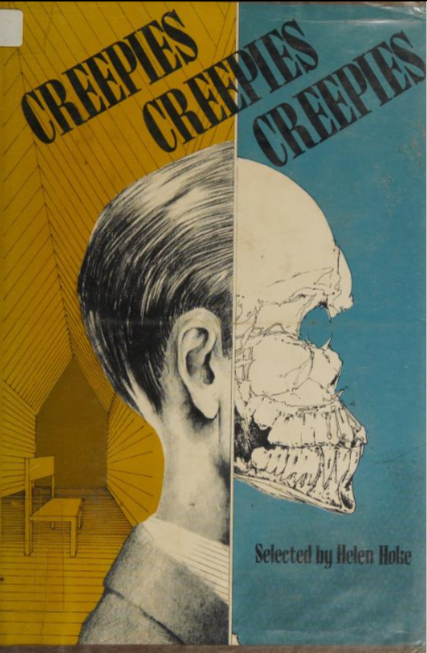
    Author Helen Hoke (1903-1990) from California, Washington County, PA published horror anthologies that’ll give you the heebie-jeebies.

    Helen Hoke’s Life & Career

    Helen was the daughter of H.L. and Mary Lamb. Her father co-owned the California Sentinel newspaper along with his brother Auburn Lamb. As a child, Helen helped at the newspaper by setting type, and later wrote articles for the paper. 

    In 1929, Helen opened a book department in a department store in Pittsburgh. Shortly thereafter, she headed another book department at Bullock’s department store in Los Angeles. In 1934, she became the director of the Julia Ellsworth Ford Foundation for Children’s Literature, a position she held until 1945. Julia Ford (1859-1950), an author and socialite, created the Foundation in 1924, which gave $2,000 for the best juvenile book of the year as well as produced movies for children. 

    Spooky Anthologies

    In the 1950s, Helen began to edit analogies, and her horror collections stand out as some of the earliest spooky anthologies created specifically with young readers in mind. They introduced generations of kids and teens to classic writers of the weird and uncanny—names like Lovecraft, Robert Bloch, Ray Bradbury, and August Derleth—through stories that were chilling but still accessible for school and library shelves. The repeated-title branding (Monsters, Monsters, Monsters; Terrors, Terrors, Terrors) became a hallmark of her editorial style, making them instantly recognizable to browsing readers.

    Helen Hoke on the back cover of Weirdies

    Helen’s Impact

    In total, she edited 29 anthologies of horror and supernatural stories for young adults. For many readers, her volumes served as a gateway into lifelong appreciation of horror and science fiction. They also played a quiet but important role in establishing horror as a legitimate category for young adult publishing, well before the boom of YA horror series in the 1980s and 1990s.

    While Helen edited dozens of spooky anthologies, she also edited and wrote other types of stories. Examples include The Fuzzy Puppy (1954), Jokes, Riddles, Puns: the best of brief humor (1959), Patriotism, Patriotism, Patriotism (1963), Whales (1973), and Giants! Giants! Giants!: From many lands and many times (1980). When she passed in 1990, her obituary in the New York Times noted she had written nearly 100 books and ran children’s books divisions at five publishing companies.

    Where to Find Books from Helen Hoke

     A few of her books are available in Washington County libraries, and some can be found online.

    Do you have any other local spooky authors we should highlight? Contact us or send a message on insta or facebook.

  • National Road Heritage Corridor unveils NEW look

    National Road Heritage Corridor unveils NEW look

    The National Road Heritage Corridor (NRHC) is proud to share a new logo design that honors the road that built a nation while pointing boldly toward the future of our region.

    For more than three decades, NRHC has worked to protect, celebrate, and revitalize the communities, landscapes, and stories of the National Road. As our organization has grown to embrace cultural preservation, trails and outdoor recreation, riverfront revitalization, and community partnerships across Southwestern Pennsylvania, we felt it was time for our visual identity to evolve as well.

    The new logo is filled with meaning drawn directly from the corridor:

    • The blue roofline represents the Monongahela River and the broad skies of our landscape—symbols of renewal, resilience, and possibility.
    • The golden rectangles echo the dashes on the National Road itself, grounding the design in the path that continues to connect our communities.
    • The warm brick pattern reflects both the craftsmanship of our historic structures and the trails that now knit our towns, parks, and natural places together.

    Together, these elements symbolize the building blocks of Place: our natural environment, built environment, cultural heritage, history and memory, community connections, and the meanings people attach to them.

    This refreshed identity gives us a flexible, modern mark that still feels grounded in tradition. It reflects NRHC’s role as a place steward, weaving together past, present, and future; road and river; culture and nature. Our mission remains the same, but our look now better matches our energy, vision, and wide-ranging work.

    You’ll begin seeing this logo across our programs, projects, and communications. From trail signage to community events, it will serve as a symbol of connection between people and landscapes, heritage and progress, memory and imagination.

    We’re excited to carry this new look forward as we continue strengthening the National Road Heritage Corridor together.

  • The Ultimate Road Trip Playlist Challenge

    The Ultimate Road Trip Playlist Challenge

    PA Route 6 Takes the Crown in the Ultimate Road Trip Playlist Challenge – But the Real Winner is Pennsylvania

    Over the last few weeks, three of Pennsylvania’s most historic roadways — PA Route 6, the Lincoln Highway, and the PA National Road — came together for something a little unexpected: a friendly playlist showdown.

    The idea was simple: what if each corridor built a playlist that captured the sound of their region — the feel of the open road, the character of the towns, the history behind the landscapes?

    The result was the Ultimate Road Trip Playlist Challenge, a first-of-its-kind collaboration between three Pennsylvania Heritage Areas. Together, we invited communities across the state to help shape playlists that honored the places we call home. Aaaand we got a little competitive.

    While PA Route 6 came out on top (HUGE congratulations to them by the way!) the real achievement wasn’t about who “won.” It was about how music brought us together.

    While our roads keep us connected from town to town, it’s music that keeps us connected from person to person.

    Each playlist became a story of it’s own — a blend of local favorites, road trip classics, hidden gems, and homegrown pride. From bluegrass and folk to rock and soul, the submissions told stories far beyond what a brochure or historic marker ever could.

    And behind it all was the collaboration.

    This wasn’t just a competition between heritage corridors — it was a celebration of what our heritage areas share: a love for Pennsylvania’s communities, history, culture, and the things that keep us Pennsylvania.

    So whether you’re winding through the northern hills of Route 6, tracing the early transcontinental path of the Lincoln Highway, or riding the legacy of America’s first federally funded road on the National Road — we hope you’ll press play and take the journey with us again. We’ll be sure to build more playlists for you to enjoy along the way. 

    🎧 The playlists are still live. The music still matters. Rock on!
    Keep listening. Keep exploring. And let the soundtrack of Pennsylvania stay with you, wherever you go.

    —–

    Get to know the Heritage Corridors of PA

    Three officially designated Pennsylvania Heritage Areas have joined the challenge:

    • PA Route 6 Heritage Corridor
      Stretching across the northern tier of the state, covering 11 counties,Route 6 offers all the best of PA’s scenic byways. Rural towns, bike ways and artist alleys are found along the stretch of road.
    • The Lincoln Highway Heritage Corridor
      Running 200 miles through the south-central part of Pennsylvania, the Penn-Lincoln Highway is steeped in Americana, vintage roadside culture, and stories of innovation and industry.
    • The National Road Heritage Corridor
      The National Road winds through PA’s southwestern counties including Fayette, Somerset, and Washington highlighting rich industrial and cultural history.
  • Searights Tollhouse

    Searights Tollhouse

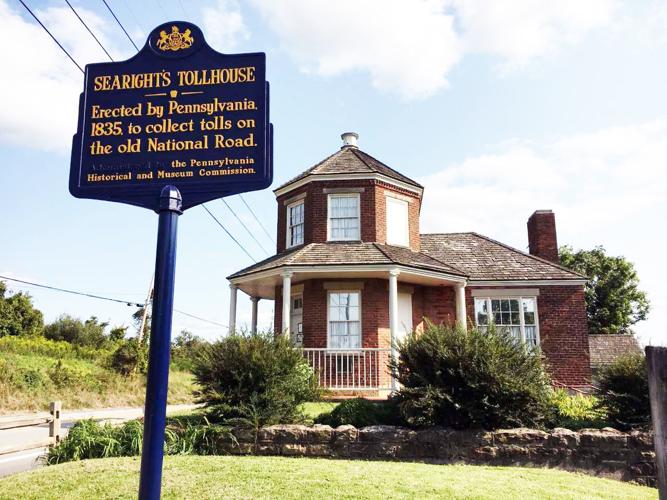
    In the early 19th century, funding for the National Road’s construction and ongoing maintenance was a significant challenge for governments. To overcome this, the concept of toll roads was introduced. Toll houses were erected at strategic points along these roads, where travelers had to stop and pay a fee in exchange for using the road. These fees varied based on the type of traffic and how much damage they would do to the road’s surface. The collected tolls were then used to finance road maintenance and improvements.

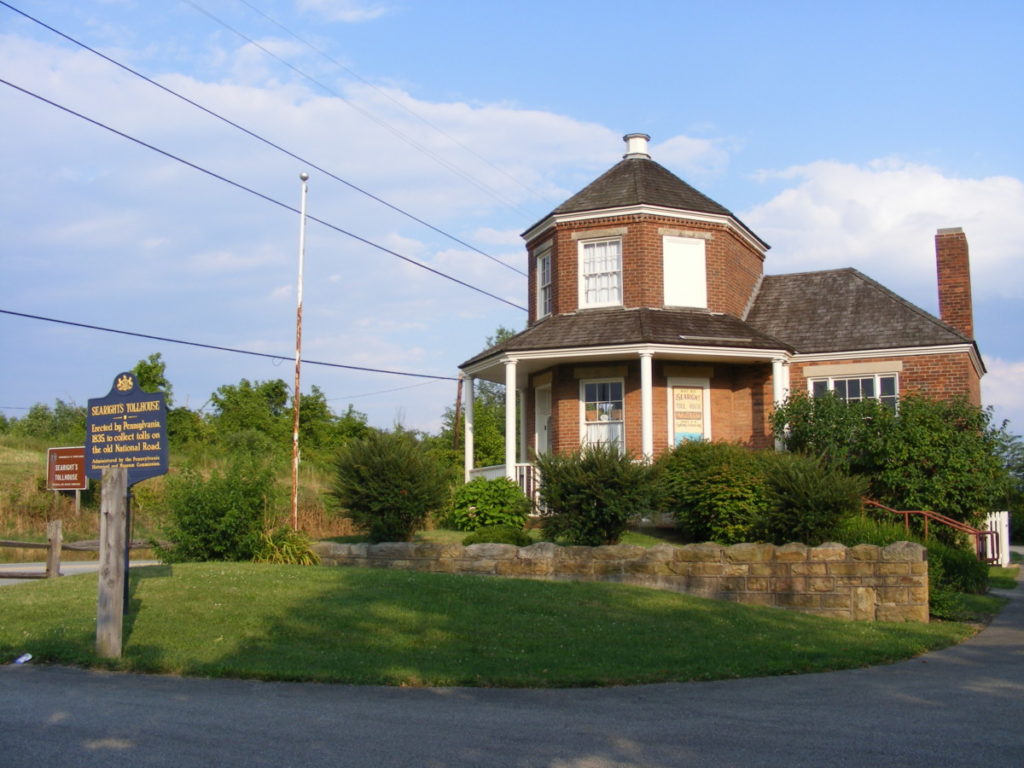
    The Searights Tollhouse, like many of its time, was built in a style that reflected its practical purpose. Constructed in 1835, it is a two-story brick structure with a distinctive octagonal tower. The toll collector and his family often lived on the second floor, while the ground floor served as the toll booth and office. A small gated area in front of the toll house allowed for the collection of fees and ensured that travelers paid their dues.

    The Searights Tollhouse is a testament to the nation’s commitment to improving transportation infrastructure in the early 19th century. As the years passed and transportation methods evolved many of the toll houses along the National Road were abandoned or demolished. However, the Searights Tollhouse has been preserved as an interpretive site, and was designated a National Historic Landmark in 1964 and placed on the National Register of Historic Places in 1966.

    Today, the toll house is part of the National Road Heritage Corridor and is maintained by the Fayette County Historical Society with support from Fayette County Commissioners, GO Laurel Highlands, and other community partners. It has been restored to its 19th-century appearance and is open to the public seasonally and by appointment, offering visitors a unique opportunity to step back in time and learn about the history of toll roads in America.

    The Searights Tollhouse is a remarkable piece of American history that stands as a tribute to the ingenuity and determination of the people who built and maintained the early transportation infrastructure of the United States, connecting the nation and facilitating westward expansion. The next time you’re traveling the National Road, don’t miss the chance to visit this charming piece of the past and explore the stories it has to tell.

  • Sculpture Tour

    Sculpture Tour

    The Whiskey Rebellion

    SOUTH MAIN STREET IN WASHINGTON, PA

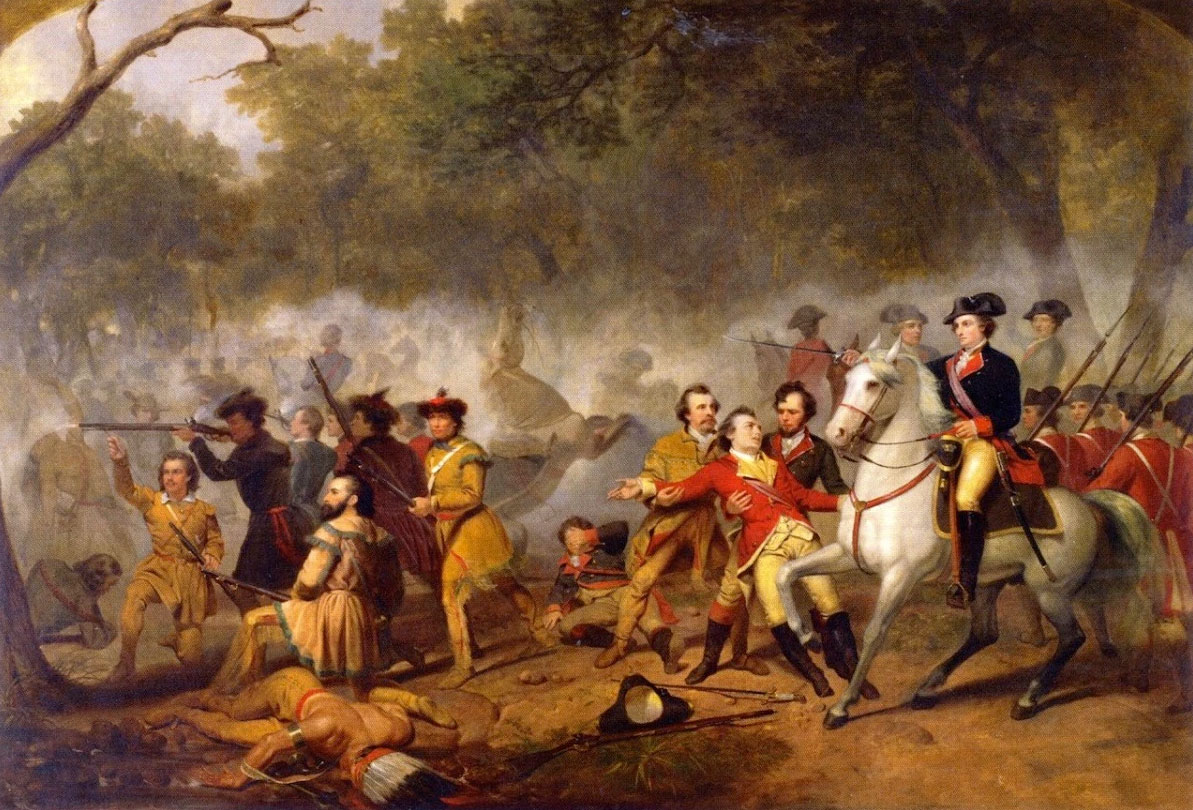
    In 1791, responding to the first federal tax ever laid on an American product, gangs of rebels began to attack federal officials in a revolt that become known as the Whiskey Rebellion. To the hard-bitten people of America’s new western frontier, the tax paralyzed their local economies while swelling the coffers of greedy creditors and industrialists. To President George Washington, the uprising threatened American sovereignty and deployed the newly-established federal Army to defeat the public revolution.

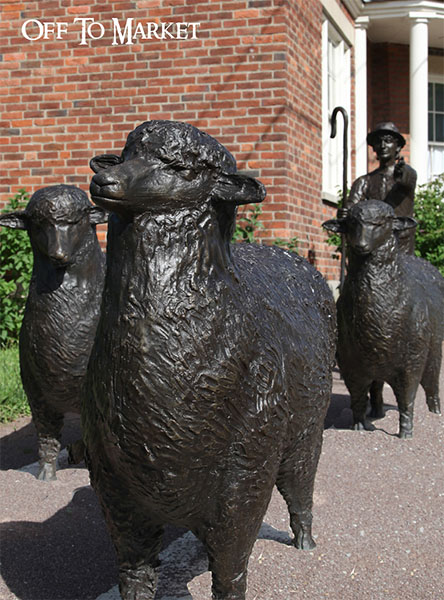
    Off to Market

    SEARIGHT TOLL HOUSE ON US ROUTE 40 IN UNIONTOWN, PA

    After 1838, when the Federal Government no longer appropriated funds for National Road maintenance. Pennsylvania and other states commissioned and built tollhouses and began collecting fees based on the type of vehicle traveling the road and the type animals that were being led to market. Stagecoach drivers, wagoners and rovers crowded the inns and taverns along the route and traders hauled produce from frontier farms to the East Coast, returning with staples such as coffee and sugar for the western settlements

    Jefferson & Gallatin

    EBERLY SQUARE, MAIN STREET, UNIONTOWN, PA

    In 1803, as President Thomas Jefferson realized that in order the United States to reach its full potential, it must expand westward and be facilitated by the central government, he turned to his Treasury Secretary, Albert Gallatin, who formulated the plan to construct the National Road. Working behind the scenes, Gallatin devised a workable solution where the states would exempt federal land sales from taxation and earmark a percentage of the proceeds for road building.

    Letters from the Road

    HISTORIC SUMMIT INN, FARMINGTON, PA

    Letters written by early pioneers, historic figures, and travelers along the National Road have documented the route’s revolutionary history and provided a view of life in early America and its challenging, often treacherous and dangerous western expansion. Several of these letters and diary excerpts have been reproduced in a permanent outdoor exhibit in the front lawn area of the Historic Summit Inn.

    The Toll Keeper

    ADDISON TOLL HOUSE IN ADDISON, PA

    The Old Petersburg Toll House, located in Addison is authentic reflection of what domestic life was like for the toll collector and his family In 1841, Toll Collector William Condon, who lived the house with his family, reported receiving a total of $1,758.87 in tolls for that year. His salary was $200.00 plus free living quarters.

  • Exploring a Forgotten Tunnel in Brownsville (Video)

    Exploring a Forgotten Tunnel in Brownsville (Video)

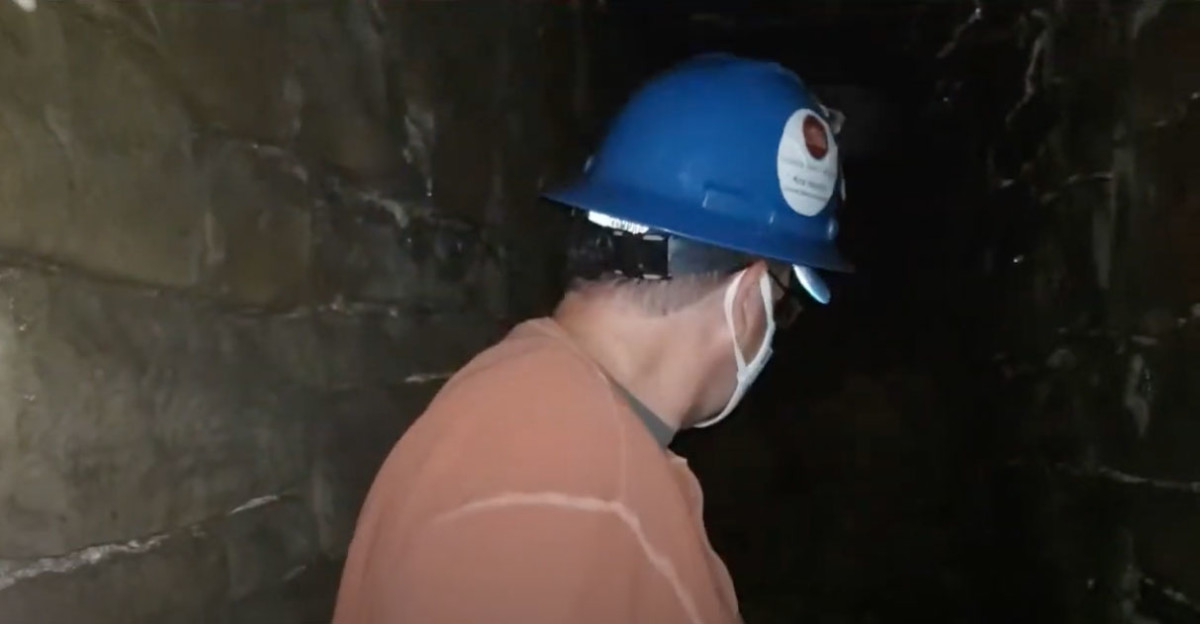
    In this National Road focused episode of Laid Back History, join Clay, Rich, and Keith the archeologist as they head under the National Road to unearth the history of the Brownsville Tunnel.

  • A Road Trip on the National Road (Video)

    A Road Trip on the National Road (Video)

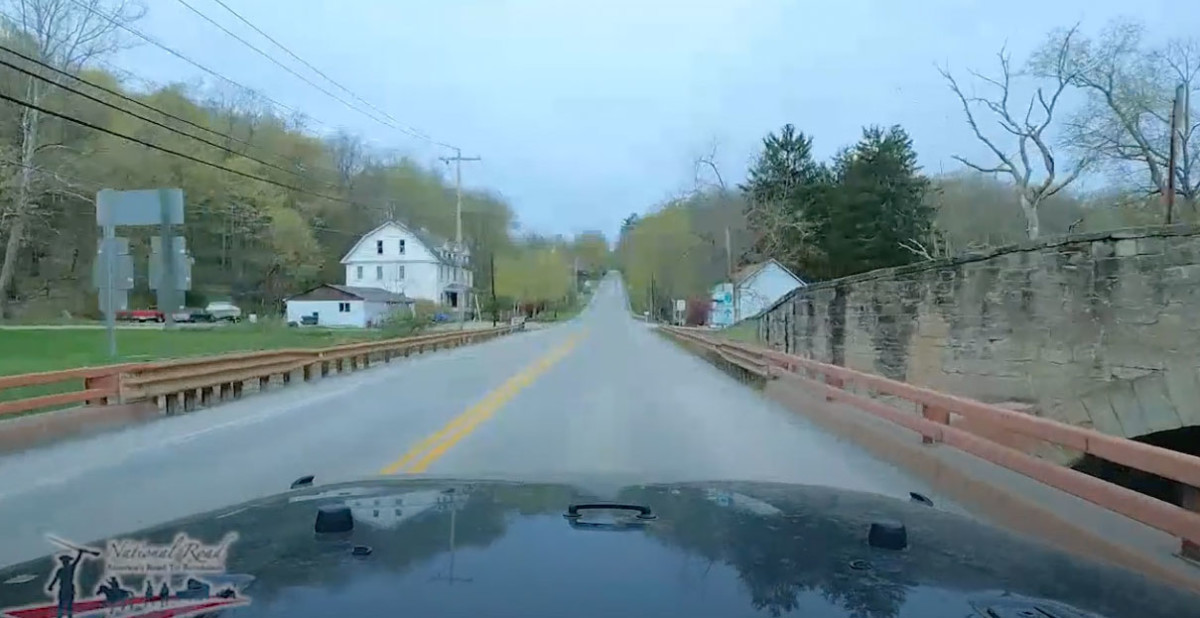
    What happens when you put a historian, an archaeologist, and a reenactor into a Jeep and ask them to follow the original National Road?

    Ride along with Brian, Clay, and Rich on their Laid Back History Road Trip as they travel the Road from Washington to West Virginia and share some history along the way.